

Full Circle
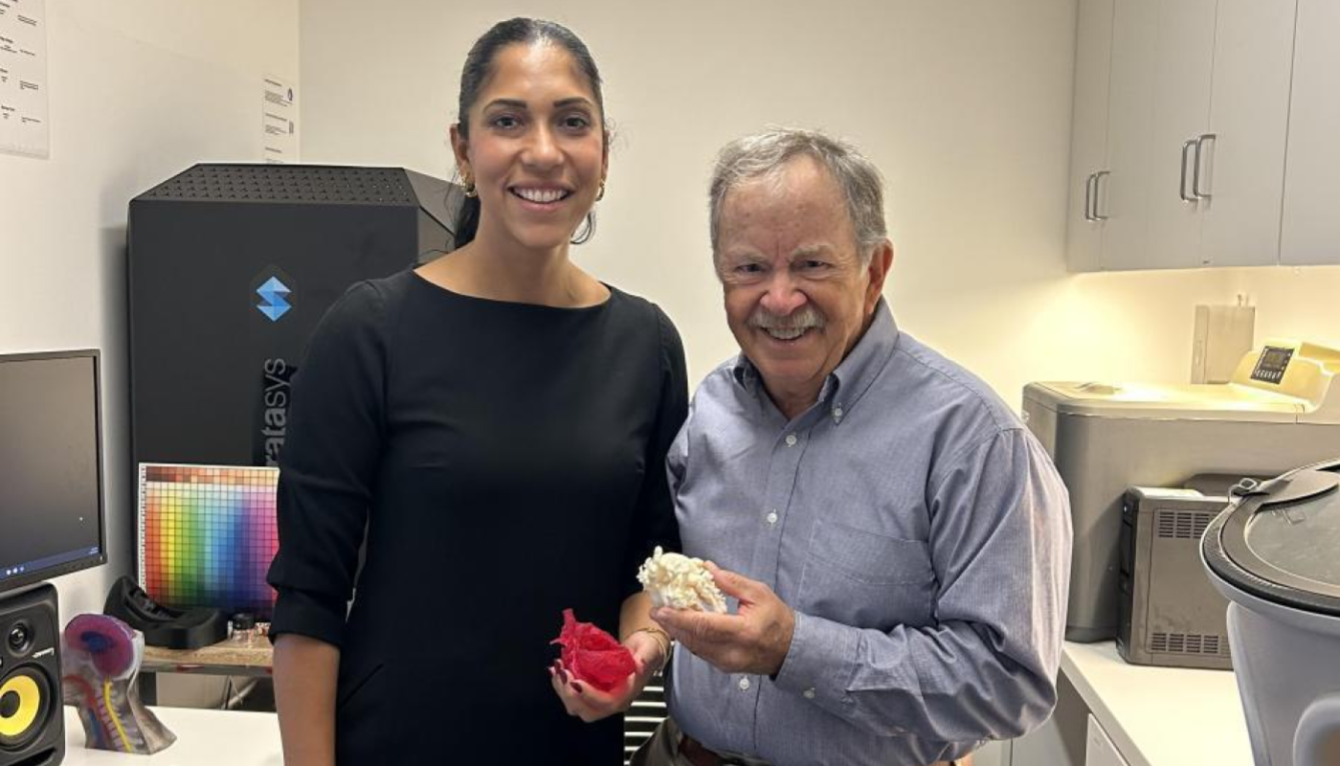
At nine years old, David Spencer was carried up the stairs at Babies Hospital by his father. Just walking around his home in Fishkill, New York, was an effort for him. It was 1958, and children like David, born with tetralogy of Fallot, a complex congenital heart defect, were not expected to live past adolescence.
I remember some good days and other days I didn’t know if I would see tomorrow.
Almost seven decades later, Dr. Spencer, now 76 and retired, lives with his wife in northwest Texas, where he practiced diagnostic and interventional radiology for 35 years. He was the first radiologist in his service area of over 130,000, and, in retirement, keeps a busy schedule. Several days a week, he works at his ranch, where he maintains a land management conservation program and a pecan orchard. Golf, photography, and travel have been longtime hobbies. He loves to visit with his two beautiful granddaughters.
This year, Dr. Spencer made a $1 million gift to pediatric cardiology at Columbia. “They gave me a second chance at life, and I am fortunate to help provide a similar opportunity for somebody else,” he says. His donation isn’t about legacy, but rather a statement of appreciation for the doctors who transform the impossible into reality.
Dr. Spencer was only five years old when he first saw Dr. George Humphreys at Columbia in 1954. Earlier, his family had moved to the Hudson Valley from Iowa, where Dr. Spencer was born.
The first heart procedure in the U.S. had occurred in 1939 at Boston Children’s Hospital, where doctors surgically closed a duct near the heart, but did not open the heart itself. The true pioneer of open-heart surgery was Walton Lillehei, MD, PhD, in Minnesota. He operated in the 1940s using cross-circulation, literally plumbing a donor’s blood into the patient’s body. These procedures were high risk, with as many fatalities as successes. Columbia University Irving Medical Center, under the leadership of surgeon Dr. Humphreys and pediatric cardiologist Dr. Sidney Blumenthal, was among the few centers attempting repair in children; at that time, open-heart surgery was new and experimental.
Initially, Dr. Humphreys had diagnosed Dr. Spencer with a ventricular septal defect (VSD) – a hole in the wall between two chambers of the heart. It wasn’t until Dr. Humphreys opened young David’s chest that Humphreys discovered a more complex problem: tetralogy of Fallot (not only the hole between the chambers of the heart, but also an obstruction between the right ventricle and pulmonary artery), with a left-sided aortic arch. “There was no way of imaging the heart,” says Dr. Christopher Petit, now co-director of the Division of Pediatric Cardiology, in the Department of Pediatrics, Columbia University Vagelos College of Physicians and Surgeons (VP&S). “They could do catheterizations, but they couldn’t even do it live. They had film, and the film had to get developed.”
My life expectancy was supposed to be about 15 years. Making my gift to Columbia is a pretty good swap.
David Spencer’s first heart operation took place on November 8, 1958. The surgical team widened his pulmonary artery and sutured the VSD, but the sutures pulled loose. He spent the next four months in the hospital, suffering from heart failure and a bout of pneumonia. He was on a horrible tasting no-salt diet, received up to 10 injections a day, and often struggled to breathe. “People had trouble drawing blood because I was bruised everywhere,” he remembers. “One day, I asked my dad, ‘Hey Dad, could I die?’ He told me, ‘Yes.’ I remember some good days and other days I didn’t know if I would see tomorrow.”
In March 1959, David was readmitted for heart catheterization because of persistent heart failure. The doctors found that the VSD had reopened and that another operation was needed. This time, the VSD repair was reinforced with a patch of Dacron fabric—a synthetic material that, while stiffer than what’s used today, closed the defect.
Emile Bacha, MD, a world-renowned pediatric heart surgeon who now leads Columbia’s congenital heart surgical team, expresses how, for his time, Dr. Humphreys’ achievement was extraordinary. “Fixing a VSD or tetralogy is a very routine procedure today. Back then, it was not.”
That second operation changed David’s life in more than one way. “Waking from surgery, I felt very different….I felt stronger but could not even raise my arm,” Dr. Spencer said. “Being in the recovery room for several days, I watched the doctors, nurses, and patients, and formed a plan for my new life. At nine years old, I decided I wanted to become a doctor.” Over time, David grew stronger. He joined the Boy Scouts, played snare drum in the marching band, and was in a rock and roll band for a few years. “You have no idea how strenuous it is playing loud music for six hours in a southern Oklahoma bar room,” he laughs. “It’s manual labor and perhaps some music.” David was a chemistry major at Austin College and was admitted to UT Southwestern Medical School. A fortunate summer job in the med school’s Radiology Department was the key factor in his career choice: “I like photography, technical equipment, and using my hands. This combination made radiology a great choice for me.”
“I had no trouble staying busy and keeping my life filled with enjoyable activities. I was lucky not to make many bad decisions and tried to optimize the time I had. I remembered TV’s Wild Kingdom host who said, ‘The slow animals are the ones that get eaten.’” That one-liner was inspirational and a key factor in David’s longevity. He has, indeed, stayed very busy: hugging the world’s tallest tree in California, photographing trains in the Canadian Rockies, traveling to Tanzania for global health initiatives, and curating a photography gallery spanning 40 years of adventure. He recently underwent a transcatheter pulmonary valve replacement and was back to golfing in no time. “I’ve lived more life than most people with a good heart,” he says.
Today, Columbia performs over 700 pediatric heart surgeries a year. In 1958, Dr Spencer received the only open-heart operation performed at Columbia that week. Young David Spencer, who spent grade-school recess resting on a bench watching everyone else play, who survived two experimental open-heart surgeries, and as an adult enjoyed a wonderful and productive life, is only one of perhaps thousands of children whose lives were changed by the care provided at Columbia. In his appreciation for the miracle he received long ago, Dr. Spencer has given $1 million to the Division of Pediatric Cardiology at VP&S, with a simple explanation: “My life expectancy was supposed to be about 15 years. Making my gift to Columbia is a pretty good swap.”
 About the Author
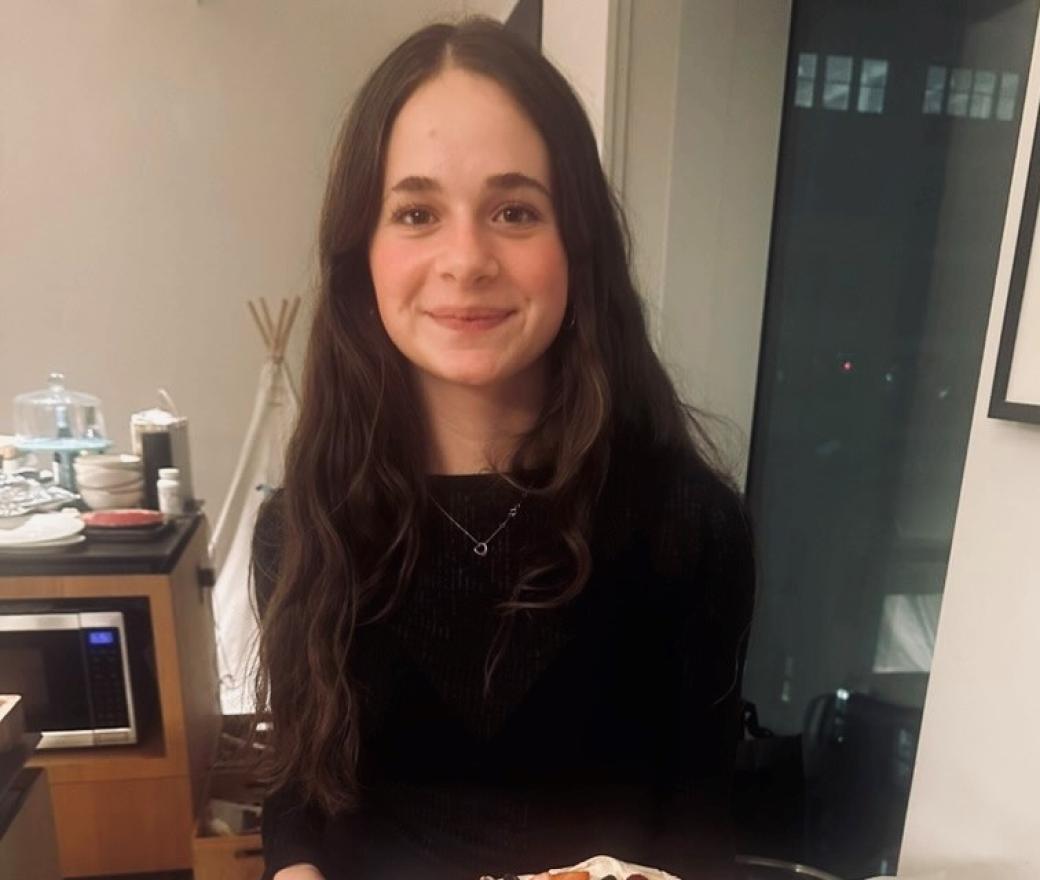
When Mirabelle Pitt was just a few days old, her parents, Brooklyn residents Cynthia Godsoe and Eric Pitt, brought her to Columbia after noticing a bluish tint and being warned she might have a heart condition. Mirabelle was diagnosed with bicuspid aortic stenosis – an abnormality of the aortic valve, restricting blood flow to the rest of the body -- and in 2017, Dr. Emile Bacha successfully repaired the valve. Today, Mirabelle is a 19-year-old sophomore at Pomona College, studying molecular biology and math, singing in an a cappella group, and enjoying the outdoors of Southern California. In the summer of 2025, Mirabelle connected with David Spencer while assisting Columbia’s advancement communications team.
Editor's note: A version of this article was originally published by the Columbia University Irving Medical Center.