

Santiago Correa Named Pershing Square Sohn Cancer Prize Winner
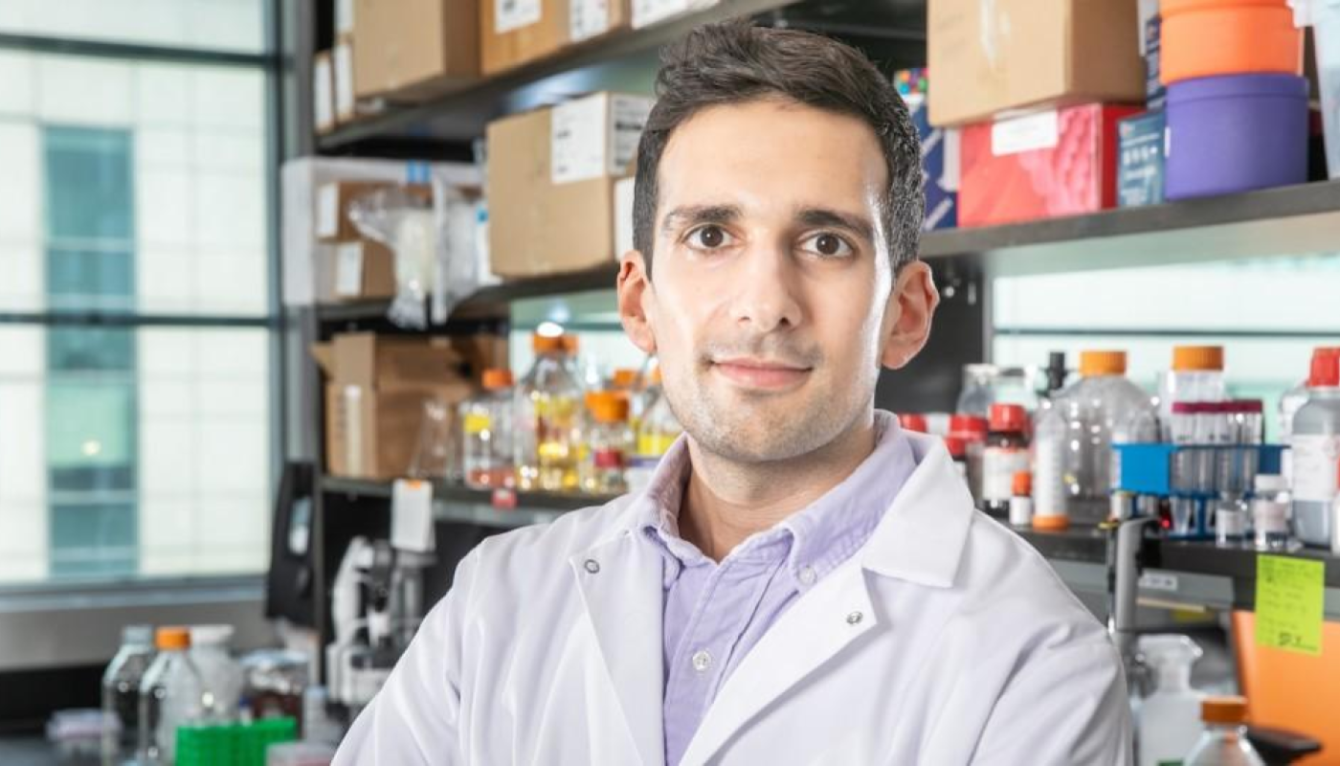
Santiago Correa, assistant professor of biomedical engineering at Columbia Engineering, has been named as one of 13 recipients to earn the Pershing Square Sohn Cancer Prize and will receive $750,000 across three years in cancer-related research funding.
The award is given to early-career scientists who have demonstrated bold approaches to research strategies in the pursuit of critical scientific discoveries. The Pershing Square Sohn Cancer Research Alliance (PSSCRA) aims to accelerate cures for cancer between the science and business communities. Awardees are encouraged to take risks in areas rather where traditional funding falls short.
“My research vision is to transform how we think about the interaction between materials and the immune system,” Correa says. “The Pershing Square Sohn Cancer Prize gives me the freedom to pursue an ambitious new direction in my research program by merging materials science and cell immunotherapy to push the boundaries of what CAR T therapies can do.”
Correa's research focuses on engineering biomaterials that create defined immune environments within the body to direct how immune cells behave and function. His lab develops injectable materials that recapitulate the architecture of tissues where immune memory naturally forms, with the goal of improving the durability and efficacy of cancer immunotherapies.
His approach addresses a fundamental limitation in current CAR T therapy: once engineered immune cells are infused into a patient, clinicians have no control over the environment those cells encounter. Correa's materials platform aims to change that — giving physicians a new tool to support and sustain CAR T cells after infusion, with the ultimate goal of converting promising short-term responses into long-term remissions.
The Pershing Square Sohn Cancer Prize will provide Correa with more than just funding for his high-risk, high-reward research. He will be given access to a notable network and invitations to collaborative programs with colleagues and charitable and business investors.
Editor's note: An earlier version of this article, written by Camryn Hadley, was published by Columbia Engineering.